
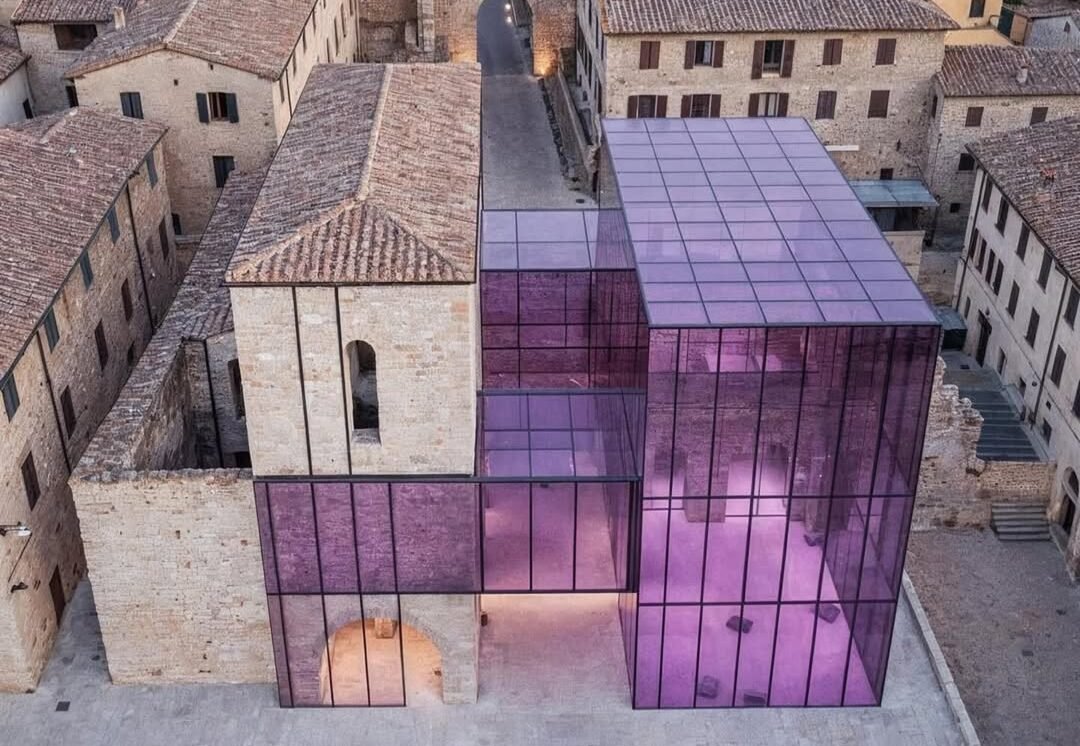
What happens when historical architecture is not preserved as a relic, but reimagined as a speculative surface for the future?
This conceptual intervention proposes an unsettling yet seductive answer: history filtered through purple glass.
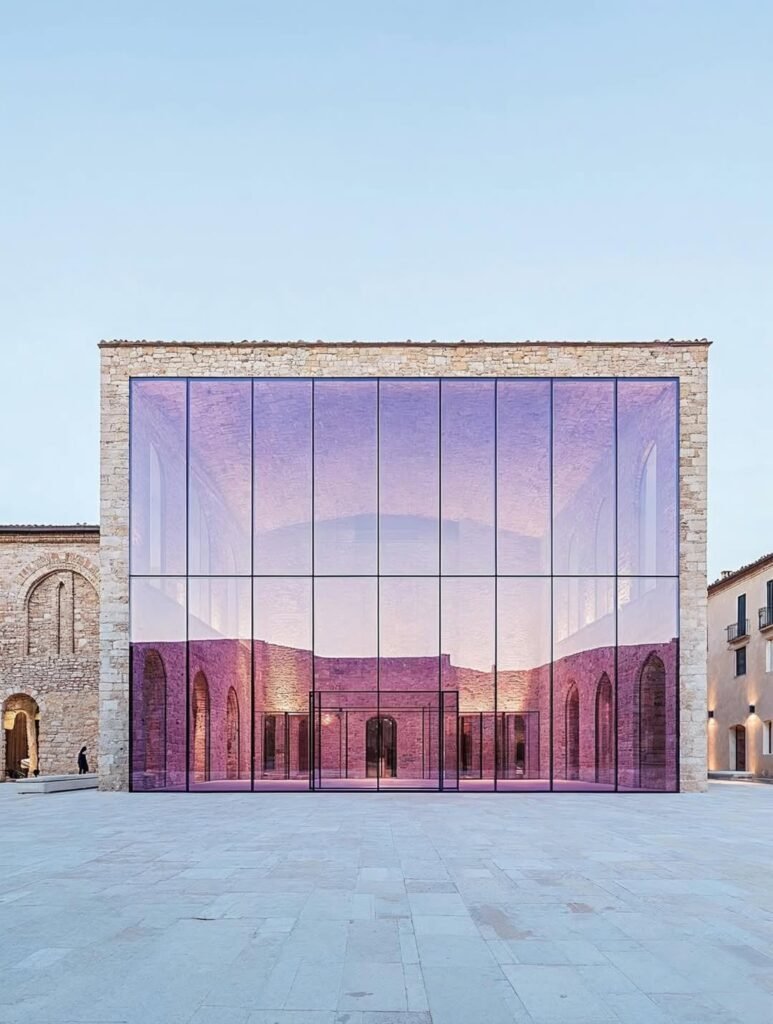
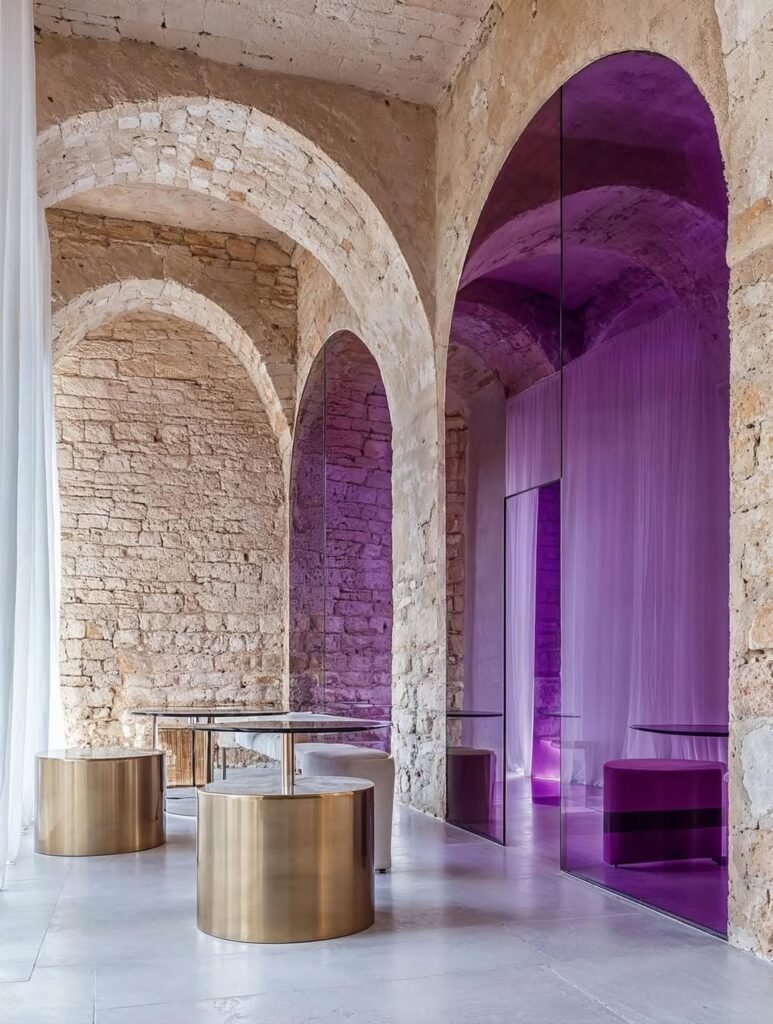
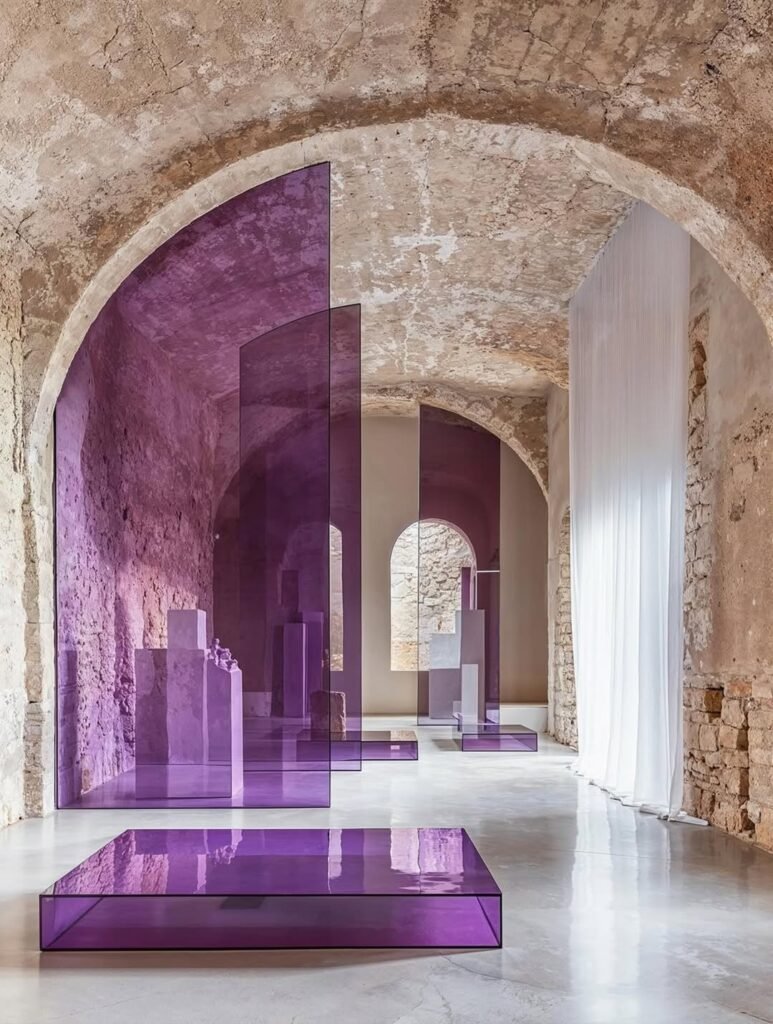
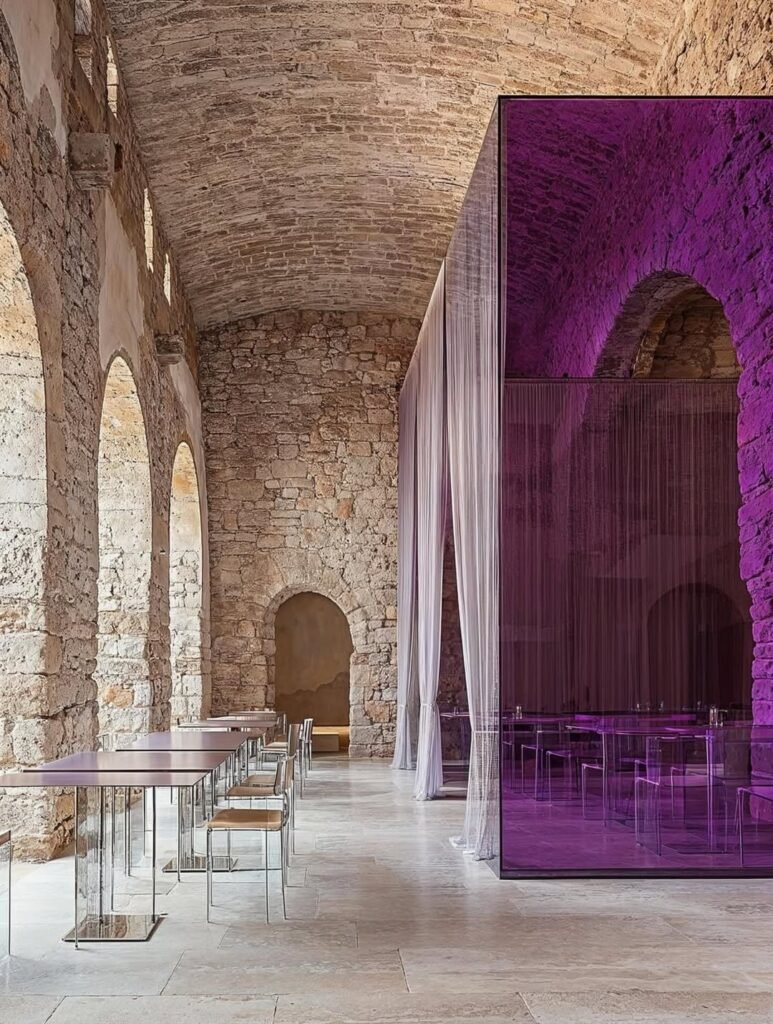
The project presents a striking visual tension between ancient stone ruins and unapologetically modern purple glass structures. Stairs, walls, and entire facades emerge in translucent color, cutting through weathered masonry with surgical precision. The contrast is deliberate: permanence meets ephemerality, weight meets light, memory meets projection.
Rather than disguising the historical substrate, the intervention amplifies it. The rough texture of centuries-old stone becomes more visible when juxtaposed with the smooth, reflective surfaces of glass. Color here is not decorative—it is disruptive.
AI as a Tool for Speculative Architecture
Developed using AI-generated imagery, the project by @matitectura does not propose a literal renovation but a conceptual scenario. Artificial intelligence functions as a speculative instrument, allowing architecture to be imagined beyond the constraints of feasibility or heritage regulations.
In this context, AI becomes a critical medium: not a replacement for architectural practice, but a way to test cultural limits. What would preservation look like if it embraced artificiality instead of resisting it? What narratives emerge when technology intervenes directly in historical form?
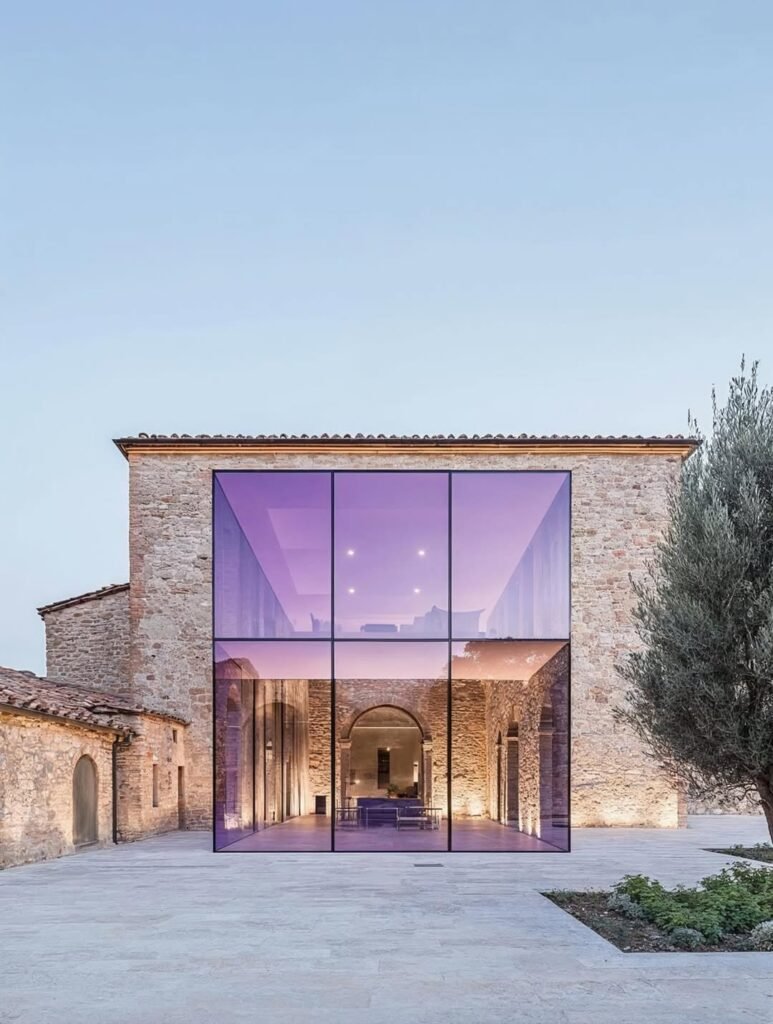
Light, Transparency, and the Reanimation of Ruins
One of the most compelling aspects of the project lies in how light interacts with the colored glass. As sunlight passes through purple surfaces, it casts an ephemeral glow onto the stone walls, temporarily transforming their appearance. The ruins are neither restored nor frozen in time—they are activated.
This play of light suggests a shift in how we relate to architectural heritage: from static monument to dynamic experience. The structure becomes temporal, changing throughout the day, resisting a single authoritative image of the past.
Preservation as Transformation
At its core, the project operates as an architectural commentary on preservation and progress. Instead of treating history as something to be protected from intervention, it proposes dialogue through contrast. The past is not overwritten, but confronted.
Such approaches resonate with broader debates in contemporary visual culture, where irony, artificial color, and speculative futures are increasingly used to question established narratives of authenticity and tradition. Similar tensions between sincerity and disruption, nature and artifice, have been explored in recent cultural analyses, including reflections on how visual irony reshapes our understanding of the world, as discussed in this article on contemporary visual culture and speculative meaning.
Architecture Beyond Function
This vision ultimately positions architecture not as shelter or infrastructure, but as cultural language. The purple glass does not solve a practical problem; it asks a question. It challenges viewers to reconsider how much intervention is too much—and whether neutrality in preservation is ever truly neutral.
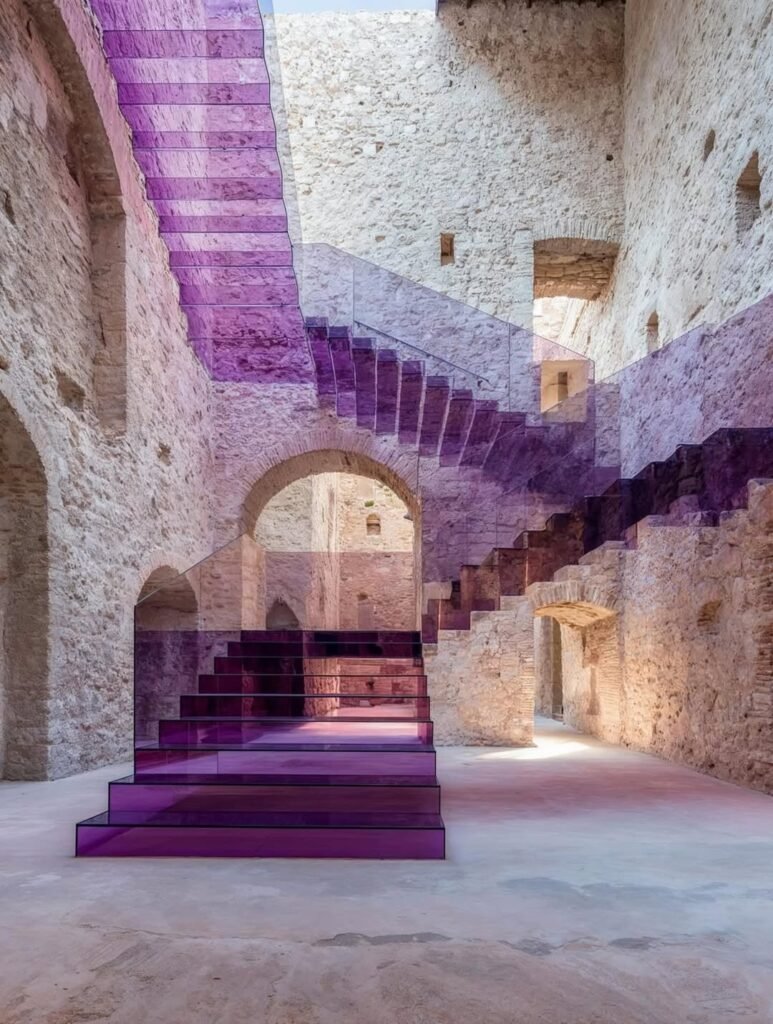
By embracing artificial color, transparency, and AI-driven imagination, the project reframes heritage as something alive, unstable, and open to reinterpretation. In doing so, it reflects a broader cultural shift: one that understands the past not as a fixed origin, but as material for future narratives.
Read more critical perspectives on art, architecture, and contemporary culture at Power of Art Magazine.
